In a dramatic shift from the standard anime formula, "Blue Miburo" immerses viewers in the turbulent world of Kyoto, 1863, during the tumultuous final years of the Edo Period. Based on the manga by Tsuyoshi Yasuda, this anime series streams on Crunchyroll and brings to life the tale of young Nio. His journey with the Miburo, a band of ronin who eventually become the legendary Shinsengumi, offers a fresh perspective on a familiar historical backdrop. As pressures mount from external forces and Japan grapples with ideological divides, Nio trains alongside real historical figures, including Hijikata Toshizō, Okita Sōji, and Saitō Hajime.
Setting the Scene: The Bakumatsu Period
The Bakumatsu period is a compelling era for a historical drama, presenting a blend of political intrigue and cultural transformation as Japan transitions from isolation to engagement with the global community. Unlike other narrations of this timeframe, such as "Peace Maker," which focuses on the Shinsengumi during their height, "Blue Miburo" provides an origin story of these soon-to-be heroes as the Mibu Roshigumi.
The Protagonist’s Journey
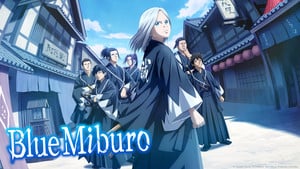
Nio, with his wide-eyed idealism and keen intellect, is the central lens through which viewers witness the evolution of the Miburo. As an orphan taken in by an elderly woman and a non-biological sister, Nio’s life changes dramatically when he encounters Okita Sōji and Hijikata Toshizō, who leverage his cunning to root out criminals. With little skill in combat, Nio compensates by employing his sharp mind to navigate the treacherous world of samurai politics.
A Visual and Narratorial Analysis
While the storyline of "Blue Miburo" holds promise, the visual execution regrettably falls short of its narrative ambition. The animation of the series often feels sluggish, with minimal movement during scenes that should brim with kinetic energy. Even during intense sequences, the minimalistic animation and plain backgrounds provide a lackluster visual ambiance that fails to fully encapsulate the era’s grandeur.
The direction and character design do little to remedy the situation, with characters often appearing static against uninspired settings. This sameness extends to the overarching plot, which struggles to maintain viewer interest due to its slow pace and predictable developments.
Character and Plot Development
"The intrigue and excitement expected from a period piece about the Shinsengumi’s genesis are notably absent in ‘Blue Miburo’", leading to a somewhat muddied execution. While the narrative does introduce occasional lively characters, the overall character development is so restrained that even the most dramatic story arcs feel anticlimactic. The introduction of the young shogun adds a fleeting spark to the series, but this is not enough to carry the series forward with momentum.
Despite these setbacks, some elements do stand out. The series theme song, “Unbreakable,” by its music director Yuki Hayashi, distinguishes itself as a highlight, offering a poignant audio backdrop that captures the series’ thematic undertones. "Nio’s clever problem-solving provides occasional bright spots and showcases the creativity possible within the storyline."
Final Thoughts
"Blue Miburo" presents a narrative that could captivate audiences with its premise, but its execution leaves much to be desired. A more robust animation and intensified focus on character depth could significantly elevate the series. As it stands, the first arc’s mediocrity might deter all but the most ardent fans of samurai drama. While "Blue Miburo" finds itself overshadowed by more dynamic historical anime, it offers a glimpse into an era longing for a more compelling retelling. For those interested in exploring other samurai-themed anime masterpieces, dedicate time to explore a more invigorated selection (external reference to other samurai dramas could be positioned here, avoiding ANN and Kadokawa).
In summary, while "Blue Miburo" struggles to find its footing, the foundational narrative constructed by Tsuyoshi Yasuda holds potential. Its representation of historical figures and moments holds the promise of untapped depths, suggesting that with refined storytelling, the chronicles of the Shinsengumi could resonate more profoundly.