Unearthing Scarlet: A Journey Through Otherworlds
The anime film Scarlet embarks on a haunting expedition that intertwines Shakespearean drama with surreal afterlife journeys. Directed by Mamoru Hosoda, known for his unique narrative style, this film merges themes of vengeance, philosophical reflection, and a touch of fantasy. Let’s delve deeper into what makes Scarlet a compelling yet flawed cinematic experience.
The Narrative Backbone
A Twist on Classic Literature
Scarlet finds its foundation in a riveting interpretation of Hamlet. The storyline follows Scarlet, Princess of Denmark, as she seeks revenge against her uncle Claudius for her father Amleth’s demise. This vendetta transcends into the afterlife, in a desolate plain called the Otherworld. Here, time and origin dissolve, and Scarlet’s quest continues, drawing parallels with existential ponderings.
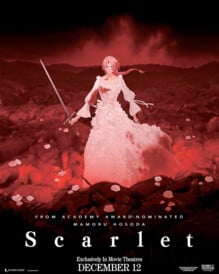
Scarlet, Princess of Denmark, embarks on a timeless quest for justice.
Accompanying Scarlet is Hijiri, a character from the present day questioning violence’s efficacy as a solution. Their interplay raises philosophical inquiries about the nature of conflict and peace—a concept recurrently explored yet not fully realized in the film.
Behind the Cinematic Curtain
Animation and Visual Style
The film boasts a hand-drawn opening sequence enveloping Elsinore Castle, drawing viewers in with familiar visual grace akin to Hosoda’s previous works. However, the transition to the CGI-rendered Otherworld does not maintain this standard. The settings, albeit initially intriguing, become overwhelmed with inconsistencies, disrupting what could have been a visually cohesive experience.
Characters’ Conundrum
One of Scarlet’s pitfalls is its character development, especially evident in Hijiri. Although his pacifism introduces natural tension, his role feels underdeveloped. Conversations that aim to unravel war and peace themes end up being repetitive, and his narrative arc meanders without contributing significantly to the story.
The Creative Dynamics
The Hosoda Approach
Mamoru Hosoda, whose previous successes include The Girl Who Leapt Through Time and Summer Wars, falters here primarily due to a disjointed screenplay. Satoko Okudera’s absence as a screenwriter noticeably affects the narrative rhythm. Hosoda’s subsequent films, self-penned, have often relied on visual ingenuity to mask their narrative shortcomings—Scarlet being no exception.
Music and Sound
The musical score by Taisei Iwasaki, while ambitious during certain sequences, fails to reach the heights expected of a Hosoda feature. The dance moments, presumably intended as cinematic highlights, are marred by poorly executed animation and an uninspiring soundtrack, reducing their impact.
Pacing and Structure
Despite the premise’s potential, Scarlet stagnates as a quest narrative. While the protagonists traverse a world rich in possibilities, they encounter more mundane crowds than vibrant characters, limiting the storytelling scope. The animation’s inconsistency further detracts from engaging the audience fully, often leaving scenes feeling cluttered and hard to interpret.
Final Thoughts
Scarlet aspires to blend timeless literature with contemporary themes of conflict resolution but stumbles in execution. Where it succeeds is in posing existential questions that resonate beyond its frames. Unfortunately, these moments are overshadowed by underwhelming character arcs and inconsistent animation quality.
Ultimately, Scarlet captures a glimpse of brilliance amidst its imperfections, serving as a reminder of Hosoda’s capable storytelling when script and direction are harmoniously balanced. The need for creative reunification with screenwriters like Okudera could revive the magic seen in his earlier works.
For those intrigued by anime that tackles deep, philosophical narratives, Scarlet may still be a journey worth embarking on, with cautionary expectations in tow.
For more insights into anime’s diverse storytelling landscapes, consider exploring Film Studies Resources (external link).