The Intriguing Case of the “Dinner Table Detective” Anime: A Comprehensive Review
In the vast realm of anime, where creativity knows no bounds, each series has the potential to capture its audience with a unique blend of elements. “The Dinner Table Detective,” however, presents a conundrum akin to the unsolved cases it centers around. What should have been an intriguing detective story falls somewhat short of expectations. Let’s delve into the depths of this series and uncover its true nature.
Unveiling the Plot: A Wealthy Heiress with a Detective’s Badge

*Dinner Table Detective Anime Series Review*
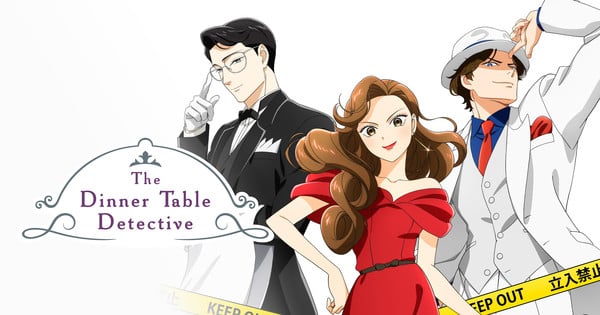
At the heart of “The Dinner Table Detective” lies Reiko Hosho, a seemingly nondescript detective who is more than meets the eye. Underneath the bland exterior is the heiress to the reputed Hosho Group. Accompanying her is Kageyama, a butler whose tongue is as sharp as his observational skills, aiding in the unravelling of mysterious cases alongside the over-enthusiastic Inspector Kazamatsuri.
A Dubious Title: Lost in Translation?
The title “Dinner Table Detective” may spark curiosity but also confusion, seemingly a misstep in localization. The original Japanese title, “Mysteries Will Be Solved After Dinner,” seamlessly ties into the ethos of the narrative, offering a tantalizing suggestion of intrigue post-dinner. Yet, the English rendition struggles to convey the same allure. This discord may not seem significant initially, but it hints at larger issues in translation that persist throughout the series.
Character Dynamics: The Triad’s Tumultuous Trek
Reiko, Kageyama, and Kazamatsuri: An Unlikely Trio
Reiko, Kageyama, and Kazamatsuri form the central triad of protagonists whose chemistry, or lack thereof, undeniably impacts the series. Reiko, while the titular detective, often relies on Kageyama for solving cases. Her lack of detective skills becomes an ongoing theme, often leading the audience to ponder her role within the series.
Kageyama, though occasionally potent in deduction, tends to rely heavily on luck rather than skill. While his observations are sharper than Reiko’s, they are not entirely foolproof. Inspector Kazamatsuri provides comic relief, yet lacks the competence typically expected from someone in his role. His over-the-top antics, though humorous, do little to elevate the narrative’s depth.
The Plot’s Predicament: Pervasive Predictability
The mysteries presented within the series are notably lackluster. They lack the engaging twists and stakes that define captivating detective stories. This element of predictability diminishes engagement, prompting viewers to question the protagonists’ capabilities and the series’ intentions.
A continuous replay of uninspired cases leads to the audience’s disconnect, a critical pitfall for any mystery genre narrative. The reliance on Kageyama’s occasionally flimsy deductions over Reiko’s supposed expertise clouds the series with a sense of unmet potential.
A Stifling Stalemate of Societal Commentary
The series hints at a commentary on privilege and merit within societal structures—how wealth often opens doors barred to more qualified individuals. Despite this pivotal theme, “The Dinner Table Detective” leaves it largely unexplored. The potential for a substantive critique of societal hierarchies remains untapped, leaving viewers with more questions than answers.
The Strength in Voices: A Sound Performance
Despite narrative lapses, the series is buoyed by strong voice performances in its subbed version. Notably, Mamoru Miyano’s zestful portrayal of Kazamatsuri adds vibrancy to otherwise stale proceedings. Kana Hanazawa and Yūki Kaji bolster Reiko and Kageyama, respectively, despite the handicaps of their characters. In contrast, the dubbed version suffers from a lack of seasoned voice actors, further highlighting the value of experienced voice talent.
Aesthetic Execution: Ambivalent Animations
Visually, the series leans into high saturation with bold contrasts, which may not appeal universally. The animation, while competent, lacks distinctive flair, mirroring the series’ narrative challenges. The bright palette occasionally undermines the thematic noir undertones inherent in detective stories.
Final Thoughts
“Dinner Table Detective” ultimately remains an unsolved enigma within the anime pantheon. With a central narrative that neither fully commits to its detective premise nor fully explores its richer thematic potential, it falls short of a must-watch recommendation. Despite notable voice performances, its lackluster mysteries and under-explored societal themes prevent it from reaching significant heights.
For those seeking a mystery thriller, “The Dinner Table Detective” might not satiate that hunger. Instead, it serves as a stark reminder of the necessity for a cohesive narrative where components synergistically elevate the storytelling experience.
Source: IMDb on voice actors and their roles. Explore more insights on voice acting dynamics. (no follow)